
Keynote title:
Heritage 4.0: Can We Trust Artificial Intelligence?
This talk will analyze the evolving role of advanced AI (particularly large language models and agentic systems) in the preservation, interpretation, and management of cultural heritage.
Moving beyond traditional skepticism, the paper considers emerging arguments that such systems may genuinely understand language, exhibit forms of creativity, and operate with a degree of autonomy that challenges earlier computational paradigms. At the same time, their partial unpredictability and frequent lack of explainability raise pressing epistemic and ethical concerns.
The central question of trust is thus reframed: not as a binary acceptance or rejection, but as a problem of calibrated reliance within complex socio-technical environments. The paper argues that trust in AI must be grounded in a nuanced account of its capacities and limits, recognizing both its interpretive potential and the risks associated with opaque, evolving systems.
Mario De Caro is Professor of Moral Philosophy at Roma Tre University, where he holds the UNESCO Chair in Ethics of Artificial Intelligence and Practical Wisdom; he also regularly serves as Visiting Professor at Tufts University. He was a Fulbright Fellow at Harvard University and a Visiting Scholar at MIT. He is President of the Society for the Ethics and Politics of Artificial Intelligence, a member of the Steering Committee of the International Federation of Philosophical Associations (FISP), and the literary executor of Hilary Putnam. He collaborated with RAI and “Il Sole 24 ore”; now writes for “La Stampa”. The International Astronomical Union named asteroid 5329 DeCaro in his honor. He has taught and lectured at more than one hundred universities in twenty-three countries and has published seven books and more than two hundred scholarly articles in six languages. His research focuses on moral philosophy, AI ethics, metaphilosophy, and philosophy of mind.
Keynote title:
Protection and Management of Cultural Heritage in Ukraine Amidst the Ongoing War
Since the outbreak of war in Ukraine, culture in all its forms and expressions has suffered widespread damage, destruction and disruption and continues to be exposed to significant risks including damage and theft. The Russian Federation’s full-scale invasion of Ukraine on 24 February 2022 is resulting in a devastating impact – both directly (for example, through shelling and military operations) and indirectly (through disruption of access to cultural sites and cultural practices) – on the diversity and richness of the country’s culture and cultural heritage, including historic cities, cultural sites and built heritage, as well as on cultural institutions, collections and the creative economy. Since the outset of the full-scale invasion in 2022, UNESCO has been assisting Ukrainian institutions and people with a two-fold approach: protection and emergency interventions, spanning from prevention to mitigating measures and urgent repair works; investing in people, livelihood and skills of cultural professionals, maintaining communities’ access to culture & enjoyment even in time of war, while laying the foundations for recovery and reconstruction. The paper presents an overview on the challenges, the approach and methodology implemented since 2022 for emergency interventions and safeguarding culture and cultural heritage, with particular attention to documentation, protection and management of damaged and at risk diverse cultural heritage in the country.
Chiara Dezzi Bardeschi is the Head of UNESCO Antenna in Ukraine, since October 2022. She has over 26 years of professional experience with the Organization, mainly working in fragile states and emergency contexts. She has previously served as Executive Officer, Coordination and Partnership Officer at the Regional Office for Central Africa region (Yaoundé) (2018-2019, 2021-2022), Programme Coordinator of the Culture component of UNESCO’s flagship initiative ‘Li Beirut’ – (Beirut, Lebanon 2020/21) and Senior Advisor and programme coordinator in several UNESCO Field Offices, among which Libya, Egypt, Sudan, Iraq, Mozambique, Namibia, among others. For Iraq, she served as Culture Programme Specialist-Secretariat of the International Coordination Committee IRAQ (2004-2005). In 2006, she established the UNESCO Antenna Office in Juba, South Sudan, where she then served as a Liaison Officer. For UNESCO she has contributed to strategic papers in the field of heritage protection. Chiara Dezzi Bardeschi holds a P.hD. in cultural heritage, and is Professor of protection of archaeological sites (2005-2017) and then of architectural preservation (2018-2022) at the Polytechnic University of Milan (Italy). She is author of several scientific publications.
Keynote title:
The Risk of Losing Tangible Cultural Heritage: Content and Approaches to a Complex Issue and the Potential Role of Digital Systems
The risk of losing tangible cultural heritage has been the subject of discussion and proposals for more than fifty years now. The issue involves two distinct aspects: determining the level of risk and implementing appropriate procedures for prevention and emergency response. Determining the level of risk requires the systematic integration of diverse and varied expertise and scenarios to be applied to assets of different types. The inherent complexity of this definition primarily concerns the sharing of content and approaches among different specialists, who, while conveying perspectives of interest and established operational methods within their own specific fields, find it difficult to share strategies and objectives, as well as assessment criteria and the very vocabulary used. The experience gained through the implementation of the Italian Ministry of Culture’s Risk Map for historic centres and the modeling of the same digital platform using CIDOC-CRM and CPM ontologies has made it possible to focus on the needs related to prevention and intervention in architecture. It has also made it possible to verify how the proper design of digital systems can substantially aid in risk assessment and allow for an acceptable level of flexibility in processing relative values, offering the possibility of incorporating variables of different natures.
However, it remains essential to definitively clarify the distinction between the various components of risk: vulnerability (linked to the nature of the cultural element), hazard (inherent in the characteristics of the environment in which the cultural element is located), and exposure (which may take into account additional factors that can influence the assessment).
Donatella Fiorani is a full professor of Conservation at the School of Architecture and director of the Graduate School of Cultural Heritage and Landscape at Sapienza University of Rome. She has taught at the universities of L’Aquila and Ascoli Piceno, as well as at the École Polytechnique Fédérale de Lausanne; she has also been a professor in master’s programs in architectural restoration in Tirana, Moscow, and Cuba. She has participated in numerous national and international conferences, directs the journal “Materiali e Stutture. Problemi di Conservazione” and is the author of approximately 250 publications. Among these, several monographs are devoted to the study of historic architecture, theoretical issues in restoration, the preservation of historic centres, and the use of digital technology in restoration. She served as president of the Italian Society for Restoration (SIRA); she has carried out professional and consulting work on various restoration projects and collaborated with ICOMOS and UNESCO.
Keynote title:
Mediterranean Cultural Heritage in the Age of AI and Earth Observation
The Mediterranean region hosts an extraordinary concentration of cultural heritage sites, historical landscapes, and archaeological assets that are increasingly threatened by climate change, urban expansion, environmental degradation, and natural hazards. In this context, Artificial Intelligence (AI) and Earth Observation (EO) technologies are powerful tools for the documentation, monitoring, conservation, and sustainable management of cultural heritage.
This talk explores how satellite data, remote sensing techniques, and AI-driven analytical methods can support the preservation of Mediterranean cultural heritage across multiple spatial and temporal scales. Particular attention will be given to the integration of EO data with close-range sensing, geospatial analysis, and machine learning approaches for detecting environmental changes, assessing risks, and monitoring the condition of archaeological sites and historic urban landscapes.
The presentation will highlight recent applications and collaborative research initiatives focused on the Mediterranean area, demonstrating how advanced digital technologies can contribute to heritage resilience, informed decision-making, and international cooperation among research institutions, public authorities, and cultural stakeholders.
By bridging space technologies, data science, and heritage studies, the talk aims to provide a forward-looking perspective on the role of AI and Earth Observation in safeguarding the cultural legacy of the Mediterranean for future generations.
Dr. Rosa Lasaponara is a leading expert in remote sensing and its applications in archaeology, cultural heritage preservation, and environmental monitoring. With over 30 years of research experience, she has pioneered the use of satellite imaging, LiDAR, and geospatial analysis to uncover hidden archaeological sites and assess climate-related risks to historical monuments.
As a researcher Director at the Institute of Methodologies for Environmental Analysis (IMAA) of the National Research Council of Italy (CNR), Dr. Lasaponara has played a pivotal role in international scientific cooperation, particularly with South America, North Africa, Middle East and China. Her partnerships with the Chinese Academy of Sciences (CAS) have facilitated groundbreaking research on the use of Earth observation technologies to study ancient civilizations and assess environmental impacts on heritage sites across Asia and the Mediterranean.
With over 350 scientific publications and leadership roles in numerous European and international projects, Dr. Lasaponara continues to contribute in shaping the future of remote sensing applications for natural and cultural heritage.
Keynote title:
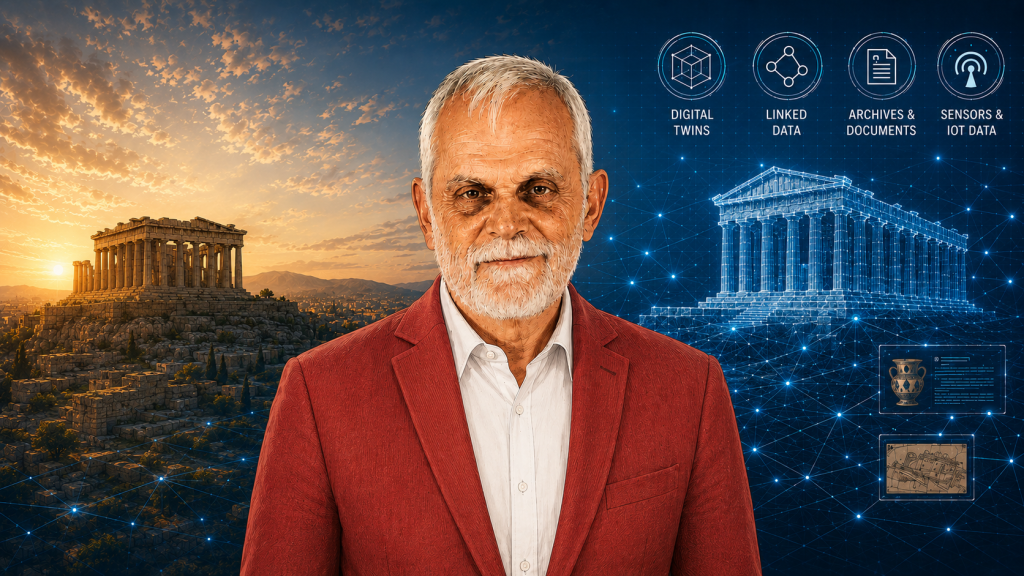
What Is the Heritage Digital Twin and Why It Can Be a Turning Point in the Digitalisation of Cultural Heritage
The definition of a holistic framework collecting and organizing the digital information about heritage, regularly updated in a continuous interplay with the real world, was introduced some three years ago with the novel concept of Heritage Digital Twin (HDT), which rapidly became the foundation of digital knowledge about heritage. The “twin” term was used before for digital replicas of physical objects, often providing only their appearance, or enriched with the use of “augmented objects”, which added information attached on specified regions to the 3D model or incorporated in them technical information about their parts. The limitations of such approaches consisted in the lack of continuous interaction between the real and the digital worlds due to the rigidity of the underlying conceptual model, and in the inability to fully incorporate the richness of the related documentation. The management of such data usually relied on SQL-based systems organizing data into rigid tables, while the HDT adopts a powerful NoSQL approach. This semantic approach enables greater flexibility and adapts to the variety of content and relationships that characterize and interconnect different aspects such as the physical structure of a monument, its visual documentation, the artistic analysis of its parts, the studies published on it, the scientific analyses on its materials as well as the intangible component which is a primary and ineliminable part of its cultural value.
The lecture will retrace and assess the development of the HDT concept including its flexibility to extend its coverage on the most diverse information, its use of sensors enabling reactivity, its application to intangible components, and will outline how AI can be properly incorporated in this framework.
Franco Niccolucci is a former professor at the University of Florence, Italy. In 2008 he became the Founding Director of a novel research centre in Nicosia, Cyprus, the “Science and Technology in Archaeology and Cultural Heritage Research Centre”, where he remained until 2013. In the meantime he maintained the role of director of the VAST Research Laboratory at Fondazione PIN in Italy. In this position he led the large-scale EU Projects ARIADNE (2013-2017) and ARIADNEplus (2017-2022) on archaeological and cultural heritage data, eventually founding in 2022 the ARIADNE Research Infrastructure (RI) AISBL, an organization that currently manages a catalogue of over 4.000.000 archaeological and heritage datasets from all of Europe and beyond. Niccolucci is the current President of ARIADNE RI, where he leads a team working on advanced projects on heritage digitization. With other colleagues he launched the concept of Heritage Digital Twin in a seminal 2022 paper, which by now has received more than 100 citations and has generated a series of derived publications exploring topics such as incorporating the use of sensors, including intangible heritage aspects and implementing AI applications. At present Niccolucci is the Scientific Coordinator of the ARTEMIS EU-funded project.
Keynote title:
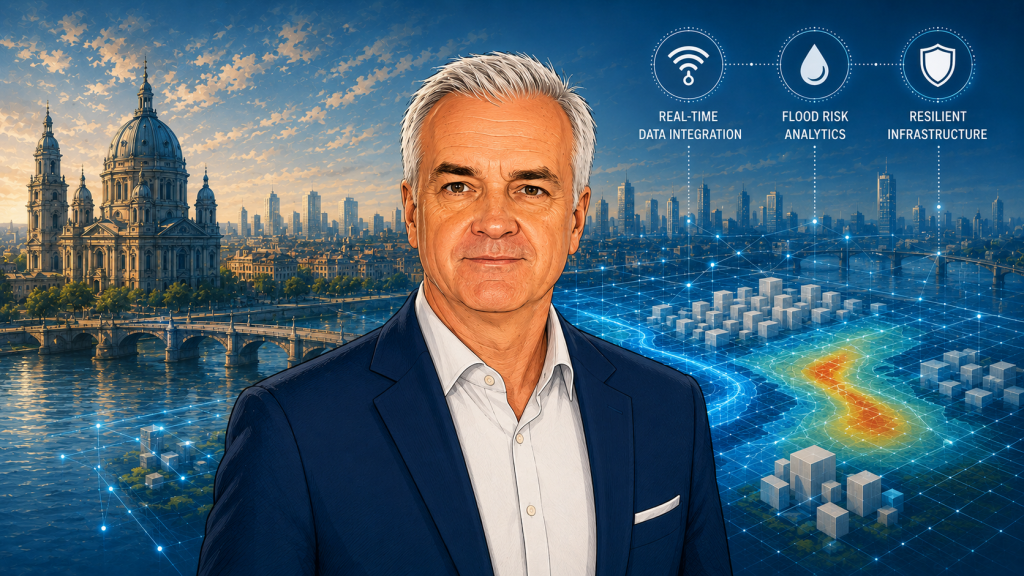
Urban Digital Twins for Climate-Resilient Cities: Real-Time Flood Risk Assessment, Systemic Resilience, and Adaptation Planning
Urban areas face rising pluvial and fluvial flood risks as climate and environmental change increase the frequency and intensity of hydrological extremes. However, urban flood-risk governance is still constrained by data silos, weak links between monitoring and modelling, and slow complex simulations. This keynote presents an Urban Flood Twin framework that advances geoinformatics from static mapping to an automated, real-time data-to-decision ecosystem for flood risk management, emergency response, and resilience planning.
The framework embeds analytical tools in an Urban Digital Twin (UDT) and Urban Data Platform (UDP), transforming topographical, infrastructure, monitoring, and semantic urban data into a unified decision-support environment. Based on a Frontend/Middleware/Backend architecture, the UDP harmonizes municipal, terrain, and infrastructure data. A customized pipeline enables automated, ad-hoc generation and rapid execution of high-resolution 2D hydro-numeric flood models using LISFLOOD-FP or WarpFlow. WarpFlow is designed as a Python plugin system for GPU/CUDA-accelerated computation, modern APIs, cloud-native formats, and integration of complex, dynamic urban features. Real-time observations and climate scenarios are converted into hydrodynamic boundary conditions, supporting early warning and scenario-based disaster risk management.
Systemic flood-risk assessment combines hydraulic indicators, such as flood depth and velocity, with exposure and damage potential from semantic urban data. Hazard and risk layers are visualized in a 3D UDT, enabling interactive exploration of vulnerable assets, flood-prone areas, risk zones, and damage patterns for municipalities, responders, planners, and citizens. Demonstrated for Dresden, Germany, the framework shows how digital-twin-based geoinformatics can accelerate response, improve multi-risk understanding, and support climate-adaptive urban transformation through evidence-based planning and resilience-oriented decisions.
With more than 30 years of research experience, Prof. Jürgen Stamm holds a doctorate in civil engineering and is currently the spokesperson for the School of Civil and Environmental Engineering at the Dresden University of Technology (TUD). Additionally, he serves as the Dean of the recently established transCampus between IIT Madras and TUD. Moreover, Prof. Stamm is the Director of the Institute of Hydraulic Engineering and Environmental Fluid Dynamics, where he also holds the Chair of Hydraulic Engineering.
Prof. Stamm is an active member of several professional associations, including DIN – German Institute for Standardization, DWA – German Association for Water, Wastewater and Waste, DTK –German Dam Committee, HTG – Port Engineering Society, and PIANC – The World Association for Waterborne Transport Infrastructure. As a member of the Editorial Board of the Journal of Applied Water Engineering and Research (JAWER), published by Taylor & Francis, UK, he contributes to the academic community.
Prof. Stamm’s research focuses on climate adaptation, particularly in the water sector. He plays a key role in the Global Water and Climate Adaptation Centre, Aachen – Bangkok – Chennai – Dresden (ABCD Centre), an academic initiative dedicated to developing climate adaptation strategies for the Global South. Another of his research priorities is model-based risk management for extreme water events in urban areas using digital twins. His work includes analyzing infrastructure damages to federal highways caused by heavy rainfall and flooding, as well as identifying cause-effect mechanisms for such damages. Additionally, he investigates the resilience and climate adaptation of dune systems, develops hydromorphological scenarios for the erosion of dams and dunes using numerical models, and researches the effects of waves along coastlines. Other research topics include ethohydraulic studies on fish passage through fish ladders and habitat modeling for macrozoobenthos in flowing waters.